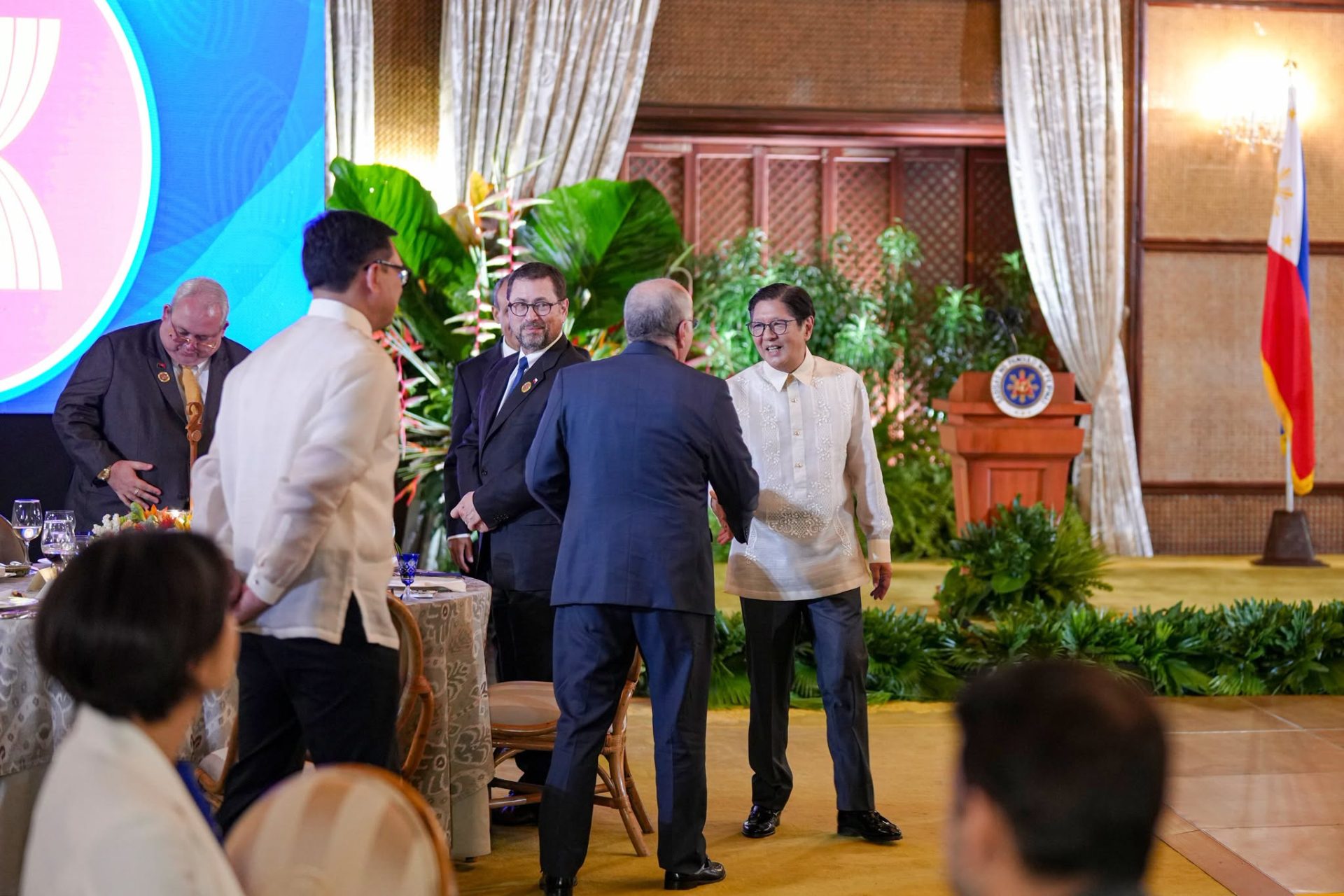
The 11 member states of the Association of Southeast Asian Nations (ASEAN) and the High Contracting Parties (HCPs) to the Treaty of Amity and Cooperation in Southeast Asia (TAC) on Friday called for stronger dialogue and practical cooperation to address regional and global challenges as they concluded the inaugural High-Level Conference marking the treaty’s 50th anniversary.
During the conference’s plenary session held at the Philippine International Convention Center in Manila, co-chairs of the three breakout sessions presented the outcomes of their discussions on conflict prevention and preventive diplomacy, maritime security and cooperation, and emerging threats and challenges.
Presenting the outcomes of the first session, European Union High Representative and Vice President Kaja Kallas said participants agreed that the TAC’s core principles remain relevant amid growing global challenges.
She said delegates stressed that preventing conflict requires addressing its root causes, including poverty, climate change, health issues, and lack of education. They also highlighted the important role of women in peace-building and emphasized that peace and security should go hand in hand with development, connectivity, and people-to-people exchanges.
“Peace-building is not only about ending wars. But it is confidence-building for the whole-of-society approach. It is also national reconciliation that requires everybody on board,” Kallas said.
She added that participants also discussed the risks posed by rapidly evolving technologies and underscored the importance of accountability in preventing future conflicts.
Presenting the outcomes of the session on maritime security and cooperation, Singapore Foreign Minister Vivian Balakrishnan said participants expressed strong support for the 1982 United Nations Convention on the Law of the Sea (UNCLOS) as the legal foundation for maintaining peace, stability, and freedom of navigation at sea.
He said delegates called for closer cooperation to combat piracy; illegal, unreported and unregulated fishing; marine pollution; and other cross-border maritime threats. They also highlighted the need to strengthen information sharing, maritime domain awareness, search and rescue cooperation, and the protection of critical underwater infrastructure.
“These things cannot be dealt with in isolation, and that is another essential reason why we need to work together,” Balakrishnan said.
In the third session, Thailand’s Deputy Prime Minister and Foreign Minister Sihasak Phuangketkeow said participants agreed that the TAC remains a living document whose principles continue to guide ASEAN’s efforts to promote dialogue, peaceful settlement of disputes, mutual trust, confidence-building, and cooperation.
He said discussions also focused on emerging challenges such as artificial intelligence, cybersecurity, cybercrime, supply chain disruptions, climate change, pandemics, and food and energy security.
Participants also supported closer cooperation through information sharing, capacity building, and ASEAN-led mechanisms.
“Overall, the discussion reflected a strong sense that the TAC continues to provide a valuable framework for dialogue and cooperation among the High Contracting Parties. The meeting shared the view that the continuing relevance of the TAC will depend not only on the enduring value of its principles, but also on the ability to translate those principles into cooperation in addressing today’s and tomorrow’s challenges,” Phuangketkeow said.
Closing the conference, Philippine Foreign Affairs Secretary Ma. Theresa Lazaro presented the outcome documents adopted during the event, including an ASEAN-sponsored United Nations General Assembly resolution commemorating the TAC’s 50th anniversary, the Guidelines on the Modalities for Engagement of ASEAN with High Contracting Parties, and the ASEAN Chair’s Statement.
Lazaro said the documents demonstrate ASEAN’s commitment to keeping the TAC relevant as a platform for dialogue, confidence-building, and practical cooperation.
“These outcome documents demonstrate that 50 years since the signing of the TAC, the treaty continues to evolve cognizant of the evolving global dynamics, and at the same time, true to the vision upon which it was delivered,” she said.
“They reaffirm that the TAC is not only a legacy of ASEAN’s founding fathers, but also a dynamic framework through which ASEAN and its High Contracting Parties can continue advancing peace, stability, and rules-based cooperation,” she added.
Lazaro urged the 62 High Contracting Parties to translate the conference’s discussions into concrete initiatives and practical cooperation, stressing that while the treaty’s principles have remained constant for five decades, their application must continue to evolve in response to present-day realities.
“May today’s discussions remind us of our enduring commitment to the treaty. We not merely affirm a set of principles. We carry with us a conviction to uphold perpetual peace, promote amity, and sustain cooperation among our peoples,” she said.
“The responsibility now rests with all of us to ensure that the treaty endures and that the conversation we began today continues beyond this conference unto our respective nations and communities,” she added. | PND
Originally published at: Philippines Presidential Communications Office