
APEC,
explained
Twenty-one economies, about 62% of world output, and no power to compel anyone to do anything. This page explains what APEC is for, what China wants from the Shenzhen summit on 18–19 November, and what the forum can realistically deliver. Country figures come from the World Bank and refresh monthly.
21
Member economies
62%
Of global GDP
1989
Founded in Canberra
18–19 Nov
Leaders meet in Shenzhen
01
A forum, not an organisation
APEC was created in Canberra in 1989 as an informal dialogue of twelve economies. It has no treaty, no court and no power to bind its members: everything it produces is agreed by consensus and adopted voluntarily. That is the single fact that explains both what it achieves and what it keeps failing to do.
It is
A leaders’ summit with a bureaucracy attached
Ministers, officials and working groups meet all year; the November leaders’ meeting is the part the world sees.
It is
Deliberately unenforceable
A member can sign a statement and ignore it. Influence works through naming, peer pressure and domestic embarrassment, not penalties.
It is not
A trade agreement
The CPTPP and RCEP are treaties. APEC is the room where the same officials talk before and after those negotiations.
Two features are easy to miss. First, members are called economies, which is how Hong Kong and Chinese Taipei sit at the table alongside China. Second, India is not a member, despite being the region’s most populous country: APEC has not admitted anyone since 1998.
02
Openness, Innovation, Cooperation
China’s theme for 2026 is “Building an Asia-Pacific Community to Prosper Together,” organised around three priorities. Read them as a statement of what the chair intends to spend its political capital on. Tap a priority.
Openness
Shenzhen priority 01 of 03China’s first priority is the language APEC has used for three decades: open markets, fewer barriers, more cross-border investment. In practice that means reviving momentum toward the Free Trade Area of the Asia-Pacific, a long-promised umbrella that would fold the region’s overlapping trade pacts into one framework.
- Restarting work on the FTAAP work programme approved at Beijing in 2014, which has stalled while members signed separate agreements.
- A push on supply-chain connectivity, seaports and the digital and physical corridors that link them.
- A statement on the multilateral trading system, written carefully enough to survive the tariff disputes of the past two years.
What to watch
Whether the leaders’ declaration names the FTAAP in anything stronger than aspirational language.
03
The 21 economies, at a glance
Every member is listed below, grouped by region. Pick one to see its population, output, land area and urban share — fetched from the World Bank, cached, and labelled with the reference year of every figure.
 China
Member since 1991 · East Asia
The world’s second-largest economy and largest manufacturer, with a coastline running from the Bohai Sea to the South China Sea.
Population
—
not reported
GDP (US$)
—
not reported
GDP / capita
—
not reported
Land area
—
not reported
Urban
—
not reported
- Capital
- Beijing
- Currency
- Renminbi (¥ · CNY)
- In APEC
- Host of APEC 2026 in Shenzhen, after Shanghai in 2001 and Beijing in 2014. The principal advocate of a Free Trade Area of the Asia-Pacific.
World Bank WDI, most recent non-empty year
04
How APEC actually works
Consensus, always
No vote has ever been taken. One member can hold a sentence hostage, which is why declarations are short and verbs are weak.
Three pillars
Trade and investment liberalisation, business facilitation, and economic and technical cooperation. The third is where developing members get practical help.
The Secretariat is small
Based in Singapore since 1993, it coordinates rather than governs. The real drafting happens in the host economy’s ministries.
Business sits inside
The APEC Business Advisory Council and the CEO Summit, held on 17–18 November, feed recommendations straight to leaders.
The two promises
In 1994 the Bogor Goals set free and open trade for developed members by 2010 and for developing ones by 2020. Both deadlines passed. In 2020 the Putrajaya Vision replaced them with a 2040 horizon: an open, dynamic, resilient and peaceful Asia-Pacific, driven by trade, innovation and inclusive growth. The difference is instructive. The first promise was specific and lapsed. The second is broad enough to survive.
05
Why Shenzhen, and why it matters
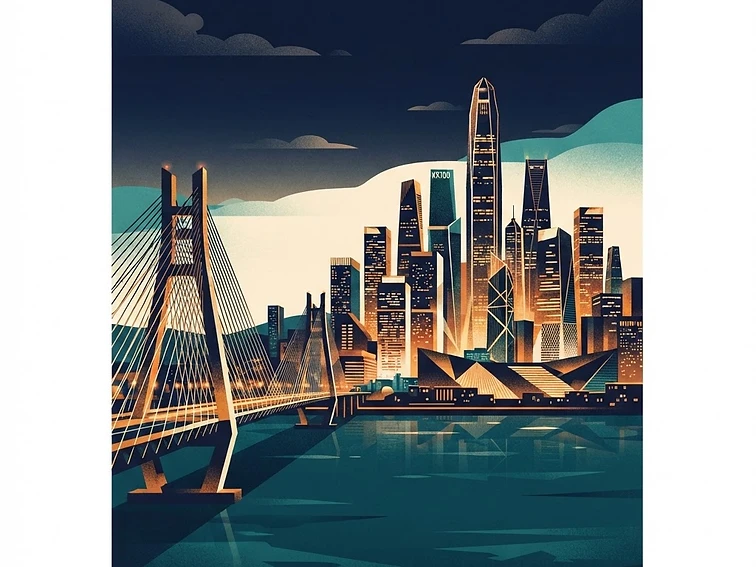
China has hosted twice before, in Shanghai in 2001 and Beijing in 2014. Choosing Shenzhen is a different argument: the city was a cluster of fishing villages in 1980 and is now a metropolis of some 17 million people and the base of BYD, Huawei and Tencent.
The emblem
The 2026 logo is a peng, the mythical bird of Shenzhen’s nickname Pengcheng, built from 21 interwoven feathers — one per member economy.
The region
Shenzhen anchors the Guangdong–Hong Kong–Macao Greater Bay Area, the test bed for China’s technology and trade strategy.
The signal
A host city is a message. Shenzhen says industrial upgrading, digital infrastructure and manufacturing capability, not financial liberalisation.
06
Thirty-seven years in ten moments
Select a year to see what changed, and what APEC learned to stop promising.
Shenzhen, China’s third summit
China chairs under the theme “Building an Asia-Pacific Community to Prosper Together,” with Openness, Innovation and Cooperation as priorities and the leaders’ meeting on 18–19 November.
07
What is actually at stake
The official agenda is trade and innovation. The live agenda is the set of disputes that determine whether the official one can move.
The US–China truce
Tariffs, rare earths and export controls are the subtext of every session. Both sides have extended the suspension of additional tariffs, but the truce is time-limited and the leaders’ statement will be read as a signal of whether it holds.
Middle East risk and energy
Conflict-driven price shocks and shipping risk are expected to dominate the trade-and-supply-chain conversations, particularly for energy importers such as Japan, Korea and the Philippines.
AI governance
China wants cooperation on artificial intelligence. The United States and its partners want to talk standards and export controls. Those are different conversations with the same title.
Maritime tensions
The South China Sea sits in the room, even when it is not on the agenda. The Philippines, Vietnam, Malaysia and Brunei are all members, and all have competing claims with the chair.
Trade architecture
Whether APEC can revive the FTAAP idea, or whether members keep signing smaller agreements outside it, decides how relevant the forum is for the next decade.
08
Test yourself
Five questions that stay true after the Shenzhen summit ends. Your best score is kept on this device.
Question 1 of 5
Score 0
What is APEC’s full name?
09
Sources and method
Country figures are not hard-coded: the page calls the World Bank’s Development Indicators API, caches the result per economy and refreshes it once a month. Each tile prints the most recent non-empty value and its year; where an indicator has no recent value, the tile says so rather than guessing.
APEC China 2026 host committee
The 2026 theme, “Building an Asia-Pacific Community to Prosper Together,” the three priorities and the host-city emblem built from 21 feathers.
APEC Secretariat
Membership, the Bogor Goals, the Putrajaya Vision 2040, working-group structure, the Business Advisory Council and the annual meeting calendar.
World Bank, World Development Indicators
Population, GDP at current US$, GDP per capita, surface area and urban share for every member economy the Bank reports on, cached monthly with each figure’s reference year.
Reuters, “What to watch at APEC 2026”
The 18–19 November leaders’ meeting dates, the CEO Summit on 17–18 November, the 62% share of global GDP and the sticking points heading into Shenzhen.
Standing guide, checked November 2026. Figures are rounded for display; follow the source links for full precision.
Keep reading
APEC 2026, reported