
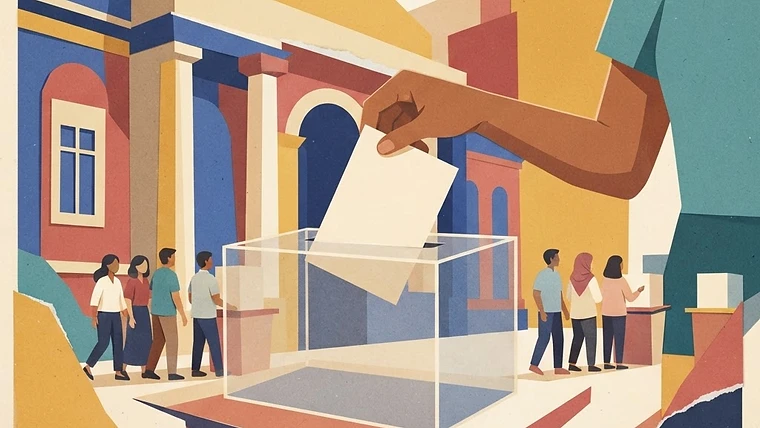
Every election season produces a sentence that sounds like a complaint and functions as a surrender. Wala na bang iba. Is there nobody else. The phrase travels well because it is honest, and because it gives the person saying it permission to stop looking.
We made a short video about it, which you can watch below, and the joke in it is not really about any single name on any single ballot. It is about how easily a country can develop a reflex of exhaustion and then mistake that reflex for realism.
A ballot that looks familiar
Imagine a restaurant that hands you a menu where the same family appears under four different dish names. You would assume the kitchen was having fun at your expense. On a ballot, we call it experience.
The satire writes itself so easily that it stops being satire. A surname that appears in three generations of public office is described as seasoned. A relative who inherits a seat is called a natural successor. A household that has held a congressional district since before most voters were born is described, without irony, as a political institution.
The family business without articles of incorporation
No other enterprise in the country enjoys this arrangement. A family that runs a bus company must still compete for routes, answer to regulators, and survive bad decisions. A political family competes once, then inherits the customer base along with the furniture.
The comparison is unfair to family businesses, which at least face the discipline of a market. Political dynasties face the discipline of an election in which name recognition does most of the campaigning for them.
Term limits, generously interpreted
The Constitution sets limits, and the limits have been met with creativity. A term ends and a relative begins. A mayor becomes a representative and the seat at city hall stays warm. The rule is satisfied while the arrangement remains unchanged, which suggests the rule was written for a cleaner political system than the one it landed in.
This is not a technicality. When the same network holds local power across decades, it also shapes who gets hired, who gets permits, who receives assistance after a typhoon, and who feels safe complaining. The cost does not appear in a budget document. It appears in how quietly people speak.
Why the joke keeps landing
Wala na bang iba is funny because everyone recognises the moment behind it. The barangay assembly with one real option. The provincial race decided before filing closed. The candidate who is not especially impressive but is, at least, not the other one.
That sentence is also a trap. It converts a choice into a weather event, something that happens to a country rather than something a country does. Once a voter reaches that point, the next step is not resistance. It is resignation with commentary.
The serious part
Here is the unamusing version. A democracy that cannot generate alternatives stops producing them. Parties weaken into vehicles for personalities. Local leaders rise without programmes because programmes were never the qualification. Talent leaves for cities or countries where effort is rewarded more predictably. The people who remain develop exactly the exhaustion the joke describes.
Corruption cases move through the courts for years while the arrangements that produced them survive the headlines. Growth figures are reported and then contested. The country is measured against its neighbours and does not always come out well, and the explanations offered rarely mention who was in charge when the decisions were made.
None of this is inevitable. Alternatives appear when institutions make room for them. That means parties that recruit and train candidates rather than adopt them. Voters who ask a second question after recognising a surname. Local media that covers a barangay race as seriously as a national one. And a habit, difficult but learnable, of judging a candidate on what a place looked like before and after, not on how comfortably the name fits.
The two sentences that follow the joke
Satire is comfortable because it lets everyone agree that the situation is absurd without requiring anyone to act. The trouble is that mockery and surrender use the same vocabulary. Both say the system is rigged. Only one of them keeps looking for a way through.
A useful test is what happens after the laughter. If the next sentence is a resigned instruction to vote for the least objectionable name, the joke has done its work and closed the conversation. If the next sentence is a question about who else is running, the joke has done something better.
That question is harder than it sounds. Finding an alternative usually means reading a list nobody promoted, sitting through a forum with fifteen people in the room, and taking seriously a candidate without the budget for billboards. It is unglamorous work, and it is precisely the work dynasties rely on nobody doing.
What serious coverage would look like
Local races deserve the scrutiny national ones receive, and rarely get it. A mayoralty controls permits, health services, and disaster response for an entire city. A congressional seat controls access to funds whose use is decided long before an audit arrives.
Covering those races properly is slow, and it is the only thing that reliably produces alternatives, because a candidate with a record is easier to defend or dismiss than a name.
Tama na, tama naman
The second half of the phrase is the dangerous one. Enough, it is good enough. Good enough is a standard nobody would accept for a hospital, a bridge, or a school. It should not be the standard for the people who decide whether the bridge gets built.
There is no punchline here. The next election will offer a ballot, and the ballot will be shorter than it should be. The only variable that remains genuinely open is how many people walk in still willing to look for a name they have not seen before, and whether the ones who do are organised enough to matter.
Wala na bang iba has an answer. It is not a slogan. It is the work of building somebody, somewhere, who is.