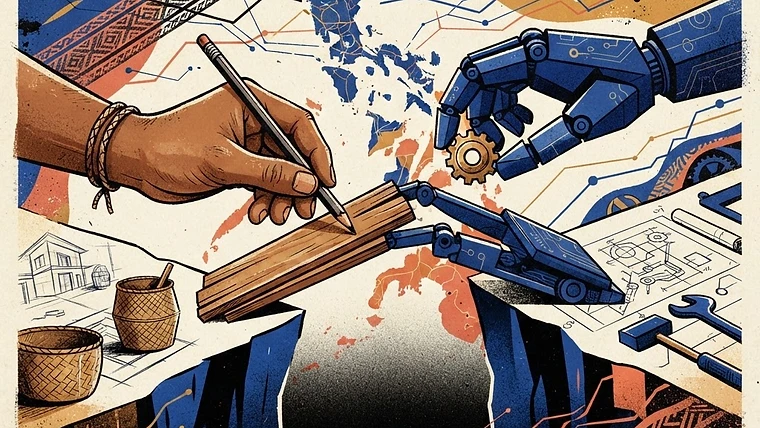
Artificial intelligence has made the future of work feel immediate. Tools that once required specialized technical knowledge can now help write, summarize, translate, analyze information, and generate software.
This has led to a familiar question: Will AI take people's jobs?
The question matters, but it is incomplete. AI is more likely to change many jobs by altering the tasks people perform, the skills employers value, and the way organizations operate. Some roles may shrink, some may grow, and others may be redesigned.
Jobs are made up of tasks
An occupation is rarely a single activity. A customer service worker may answer questions, resolve unusual problems, document cases, manage difficult conversations, and coordinate with other teams.
AI may automate or accelerate some of these tasks without being able to perform the entire job reliably. The result depends on the technology, the workplace, the cost of implementation, and the consequences of mistakes.
This distinction matters because exposure to automation does not automatically mean a job will disappear.
Skills and judgment become important
As routine tasks become easier to automate, workers may need to place greater emphasis on judgment, communication, problem-solving, domain knowledge, and the ability to check machine-generated output.
Technical skills remain valuable, but workers do not all need to become AI engineers. Understanding how to use tools responsibly within a particular profession can also be useful.
Employers have responsibilities, too. Introducing AI without training, clear accountability, or proper review can create new risks rather than genuine productivity improvements.
What this means for Filipino workers
The Philippines has a large services workforce, including people in customer support, administration, finance, education, and creative work. These sectors may experience significant changes as AI tools become more capable and widely adopted.
The effects will not be uniform. Some workers may benefit from tools that reduce repetitive work. Others may face pressure on wages, working conditions, or demand for particular services.
Access to training, reliable digital infrastructure, and opportunities to move into higher-value work will influence who benefits.
Adaptation is a shared responsibility
It is too simplistic to tell workers that they must simply adapt. Individuals can learn new tools, but schools, employers, governments, and industry groups also shape whether people have realistic opportunities to develop new skills.
The future of work will not be decided by technology alone. It will also be shaped by decisions about education, labor protections, business investment, and how productivity gains are shared.