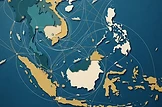

The Association of Southeast Asian Nations, better known as ASEAN, is often mentioned during diplomatic meetings and regional summits. For many people, however, it can seem distant from everyday life.
In practice, cooperation among Southeast Asian countries can influence trade, investment, travel, education, environmental policy, and regional security. Understanding ASEAN helps explain how the Philippines works with its neighbors and why regional relationships matter.
What is ASEAN?
ASEAN is a regional organization established in 1967 to promote cooperation among Southeast Asian countries. Its work covers political and security issues, economic cooperation, and social and cultural matters.
The organization provides a forum for governments to discuss shared concerns and develop regional initiatives. It also helps member countries coordinate positions and engage with external partners.
Why economic cooperation matters
Southeast Asian economies are connected through trade, investment, manufacturing, and services. Regional agreements and cooperation can make it easier for businesses to operate across borders and for goods to move through supply chains.
For workers and consumers, these connections can affect employment opportunities, product availability, prices, and the range of services available in the region.
But regional integration does not benefit every country, industry, or worker equally. Governments still need policies that help local businesses compete and ensure that workers can access new opportunities.
Security and shared challenges
ASEAN also provides a platform for discussing maritime security, transnational crime, disaster response, public health, and other cross-border issues.
These problems rarely stop at national borders. Pollution can move across countries, criminal networks can operate internationally, and natural disasters can disrupt regional supply chains.
Cooperation does not guarantee agreement. ASEAN members have different political systems, economic priorities, and relationships with major powers. Reaching a common position can therefore be difficult, particularly on sensitive security issues.
Why it matters to the Philippines
The Philippines' prosperity and security are closely connected to the wider region. Its relationships with neighboring countries affect trade, investment, maritime interests, migration, and diplomatic influence.
ASEAN is not a substitute for national policy, and it cannot solve every regional dispute. Its value lies in creating channels for dialogue and practical cooperation.
For ordinary Filipinos, the relevance is straightforward: the country's future is tied not only to decisions made in Manila, but also to how Southeast Asia works together in an increasingly interconnected world.