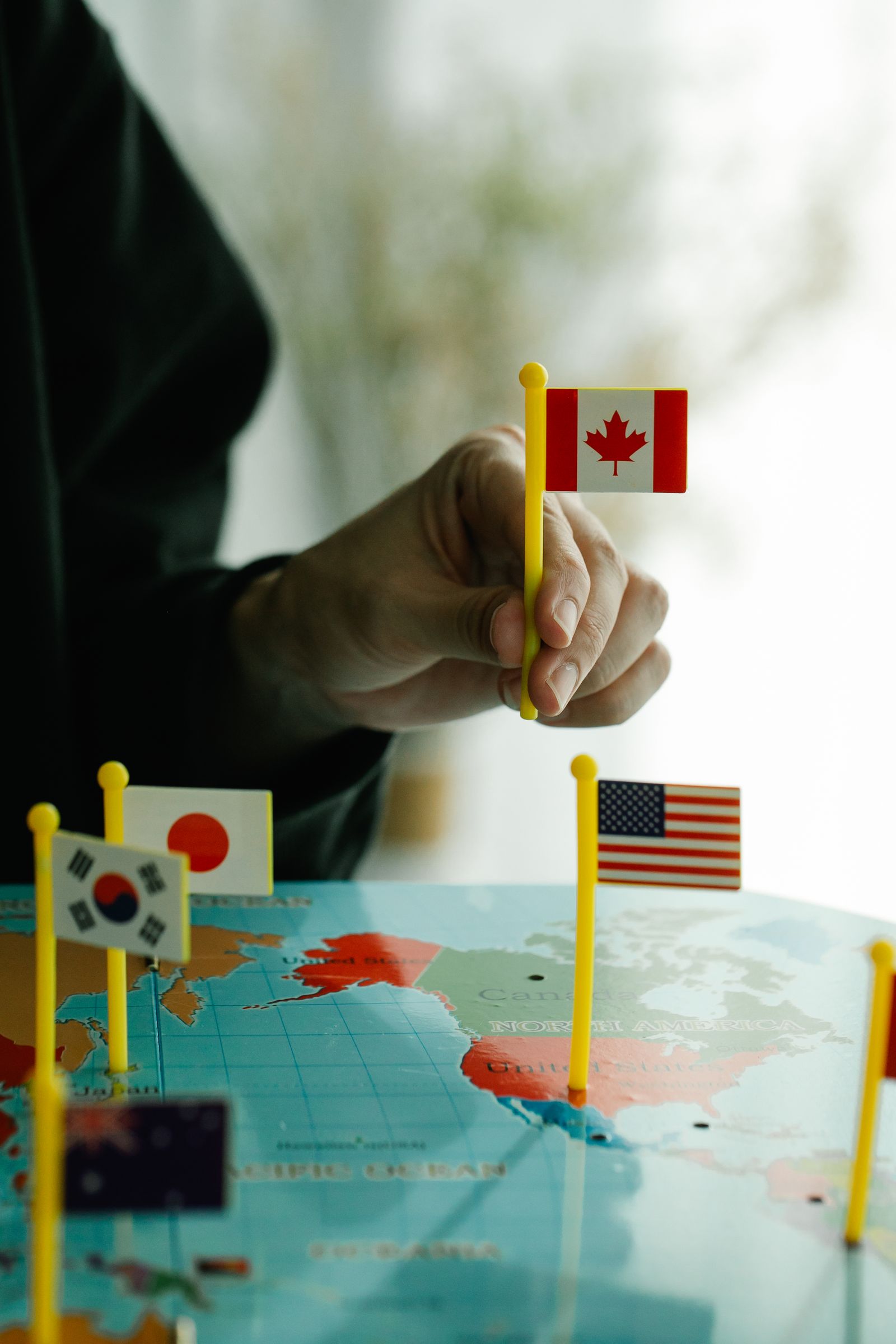
Shenzhen spends this week as the capital of the Asia-Pacific. The 33rd APEC Economic Leaders’ Meeting runs on 18 and 19 November, following the APEC CEO Summit on 17 and 18 November, and it brings together the leaders of 21 economies that between them produce about 62% of the world’s output and account for roughly half of its trade.
That is the impressive version. The useful version is stranger. APEC has no treaty, no court, no sanctions and no power to compel any member to do anything. Everything it agrees is voluntary, reached by consensus, and enforced, where it is enforced at all, by embarrassment.
What APEC actually is
The Asia-Pacific Economic Cooperation forum began in Canberra in 1989 as an informal dialogue of twelve economies. It became a leaders’ meeting in 1993, acquired a small secretariat in Singapore, and has never acquired the authority that a trade agreement would carry.
Its members are called economies rather than countries. That is not a stylistic quirk. The 1991 arrangement that admitted China, Hong Kong and Chinese Taipei at the same time required a formula that let all three sit at the table without resolving their political status. The wording has stuck for 35 years.
Three things APEC is not
- It is not a trade agreement. The CPTPP and RCEP are treaties with dispute machinery. APEC is the room in which the same officials talk before and after those negotiations.
- It is not a security alliance. Defence issues are supposed to stay outside; in practice they arrive in the corridors and in the bilateral meetings on the margins.
- It is not universal. India, the most populous country in the region by any definition, is not a member. Neither are Pakistan, Bangladesh or Sri Lanka.
What happens this week
The week follows a pattern that has barely changed in three decades. Chief executives meet on 17 and 18 November for the CEO Summit, where they press ministers on market access and predictability. Leaders arrive for the formal sessions on 18 and 19 November. The deliverable is a chair’s statement and a set of annexes, drafted by officials over months and negotiated line by line until the last morning.
Most of the substance is settled before the cameras arrive. The cameras exist to make the settlement public, and to give each leader a domestic clip to take home.
The three priorities China chose
Under the theme “Building an Asia-Pacific Community to Prosper Together,” the host has organised the year around Openness, Innovation and Cooperation. Openness means trade and investment language, including a renewed nod toward a Free Trade Area of the Asia-Pacific. Innovation means the digital economy, artificial intelligence and industrial upgrading. Cooperation means the softer files: energy security, small enterprises, inclusiveness and sustainability.
None of those priorities is binding. All of them are signals about where the chair would like the regional conversation to sit next year.
Who is expected in the room
China has not published a final attendance list, but the gathering is expected to be unusually heavy at head-of-government level. US President Donald Trump, Russian President Vladimir Putin and Chinese President Xi Jinping are all expected, alongside Philippine President Ferdinand Marcos Jr, Canada’s prime minister, Australia’s prime minister, Mexico’s president, Indonesia’s president and the leaders of Malaysia, South Korea, Vietnam, Japan and New Zealand.
Chinese Taipei does not send a head of government. It appoints an envoy, this year Stan Shih, the founder of Acer, which is what the economies-not-nations arrangement looks like in practice.
APEC’s real product is not a rule. It is a habit: the same officials, meeting every year, in a room where nobody can be expelled.
Why the host city carries the message
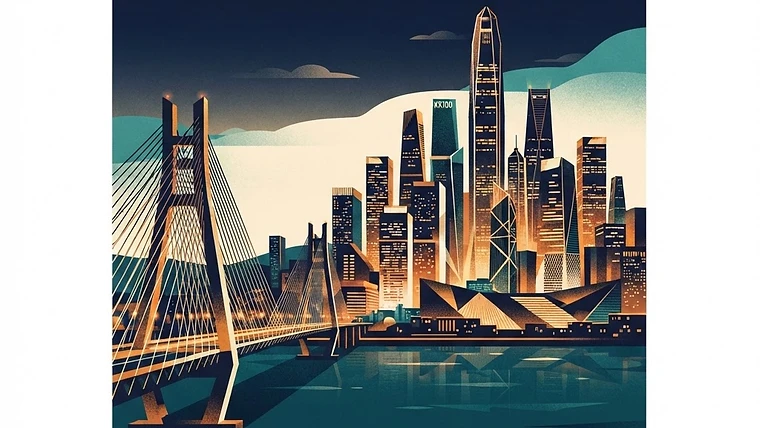
China has hosted twice before, Shanghai in 2001 and Beijing in 2014. Shenzhen is a different argument. The city was a collection of fishing villages and farmland in 1980, when it became the country’s first special economic zone, and it is now a metropolis of some 17 million people and the home base of BYD, Huawei and Tencent.
Choosing Shenzhen says the story China wants told this year is industrial capability and technology, not financial liberalisation. The 2026 emblem makes the point literally: a peng, the mythical bird behind the city’s nickname Pengcheng, formed from 21 interwoven feathers, one for each member economy.
What it means for Filipino readers
Three things, mostly indirect. First, the Philippines is a founding member and will use the week to market itself for investment in electronics, data centres and the digital economy. Second, the trade conversation determines the conditions under which Philippine exports enter the United States and China, its two largest trading partners. Third, the South China Sea will not be on the formal agenda and will be discussed anyway, in bilaterals, in the leaders’ statements, and in what is conspicuously left out of them.
What will not happen is an announcement that changes Philippine tariffs, visas or wages. APEC does not work that way, and never has.
What to watch
- Whether the leaders’ statement names the FTAAP in language stronger than aspiration.
- Whether a US–China meeting on the margins produces anything more durable than an extension of the tariff truce.
- Whether AI governance is treated as standard-setting or as technology transfer, which are very different conversations wearing the same title.
- Whether the statement mentions the South China Sea at all, and in whose phrasing.
For the mechanics, the membership and the history, see our interactive APEC explainer, which walks through all 21 economies with live World Bank figures.