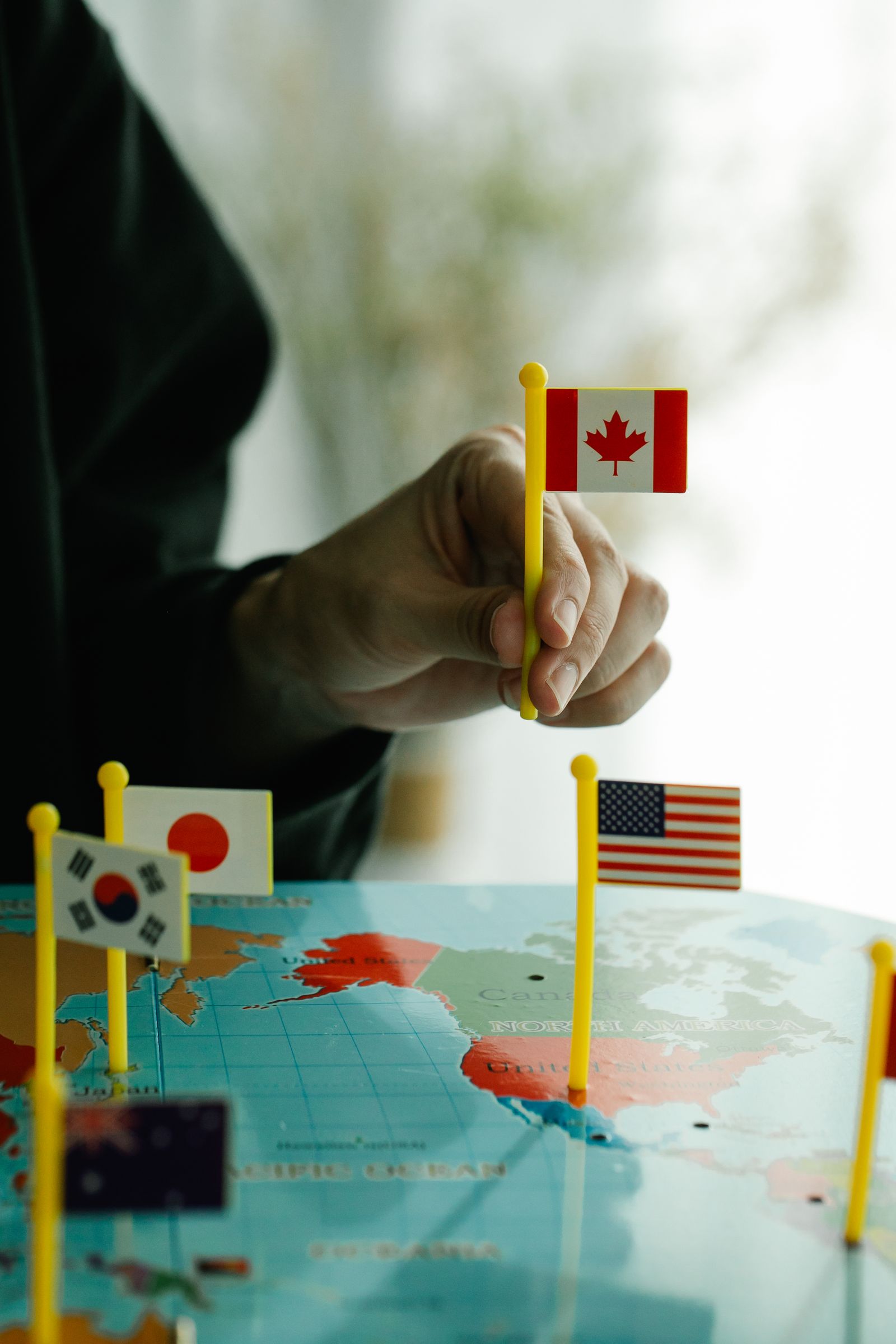

The most revealing fact about APEC’s membership is not its size. It is the range inside it. The group includes the world’s largest economy and several of its smallest by output per person, two economies of more than a billion people and one of about 470,000, and a set of governments that disagree about almost everything except the usefulness of meeting annually.
Twelve founders, nine later arrivals
APEC began in 1989 with twelve economies: Australia, Brunei, Canada, Indonesia, Japan, Korea, Malaysia, New Zealand, the Philippines, Singapore, Thailand and the United States. Six more arrived in two waves: China, Hong Kong and Chinese Taipei in 1991, then Mexico and Papua New Guinea in 1993. Chile joined in 1994. Peru, Russia and Vietnam completed the roster in 1998, and nobody has joined since. A moratorium agreed in the 1990s has never been lifted.
| Economy | Joined | What it brings to the table |
|---|---|---|
| United States | 1989 | The largest single market for Asian exports, and the source of most of the tariff risk in the room |
| China | 1991 | The host, the largest manufacturer, and the leading advocate of an FTAAP |
| Japan | 1989 | The region’s largest creditor and the architect of the CPTPP |
| Korea | 1989 | Memory chips, advanced manufacturing, and the 2025 chair that handed over to China |
| Chinese Taipei | 1991 | Advanced semiconductors, represented by an envoy rather than a head of government |
| Hong Kong, China | 1991 | Finance and logistics, and the reason members are called economies |
| Philippines | 1989 | Services, electronics assembly, maritime claims and a large diaspora |
The economies, grouped
Southeast Asia
Brunei, Indonesia, Malaysia, the Philippines, Singapore, Thailand and Vietnam. Between them they cover the whole range of the bloc’s development: Singapore’s financial centre, Vietnam’s manufacturing boom, Indonesia’s minerals and scale, Malaysia’s semiconductor back end, Thailand’s automotive base, the Philippines’ services economy and Brunei’s energy exports. All seven are also ASEAN members, which means APEC’s Southeast Asian voice is unusually coordinated.
East Asia
China, Japan, Korea, Hong Kong and Chinese Taipei. This is where the region’s technology supply chain lives, and where the summit’s innovation priority will be won or lost. It is also the group with the sharpest unresolved political tensions: between China and Japan, across the Taiwan Strait, and between China and the Philippines.
Oceania
Australia, New Zealand and Papua New Guinea. Australia convened the first meeting and remains one of the strongest advocates of rules-based trade. New Zealand is the depositary of the CPTPP. Papua New Guinea is the group’s clearest example of why economic and technical cooperation is a priority at all: it needs capacity, not declarations.
The Americas
Canada, Chile, Mexico, Peru and the United States. For the Latin American members, APEC is the bridge to Asian demand for minerals, agricultural goods and, in Mexico’s case, manufactured inputs. For the United States, it is the venue where its tariff and technology policies are explained to the economies they affect.
Eurasia
Russia, which joined in 1998 and hosted the 2012 summit in Vladivostok. Its Pacific trade has been reshaped by sanctions and by the redirection of energy exports toward Asia, and its presence keeps the question of great-power politics permanently inside an economic forum.
Why the numbers matter more than the declarations
Put the members side by side and the arithmetic of consensus becomes obvious. GDP per person across the membership spans roughly two orders of magnitude. A commitment that is straightforward for Singapore or the United States can be an institutional impossibility for an economy with a small tax administration and a thin statistical service.
This is why the third pillar of APEC’s work, economic and technical cooperation, exists at all. It is the mechanism by which richer members buy the participation of poorer ones, not with enforcement but with training, systems and pilot programmes.
Consensus is easy when nobody is obliged to do anything. The work is in making the voluntary commitment cheap enough that everyone can afford to make it.
The region’s blind spot
India is not a member. Nor is Pakistan, Bangladesh, Sri Lanka or any Pacific island state other than Papua New Guinea. For a forum that calls itself Asia-Pacific, that is a large omission, and it is the main reason APEC cannot claim to speak for the region’s population even when it can claim most of its output.
The membership is also frozen by its own rule. Admitting anyone now would require consensus from 21 governments, several of which have reasons to keep the club small.
You can explore every member, with live World Bank figures and each economy’s role in the forum, in our interactive APEC explainer.